
Food to go is hugely vibrant in 2026. How have you seen it develop?
It is the best sector in retail – there’s nothing quite like it. It’s fast-moving, endlessly creative, brutally commercial, and gives you genuine space to make your mark if you care enough.
I’ve been in FTG for over 25 years and it’s given me lifelong friendships, the chance to travel the world and the privilege of working with brilliant people. I genuinely feel lucky to still be excited by it.
I often think back to an early role at M&S Milton Keynes, where FTG was literally a one-metre fridge of fairly uninspiring sandwiches. That same store today tells a story of evolution. The fridge is now eight full bays and takes up a huge proportion of the shop. And you will find salad bowls, poke bowls, smoothies, vitamin shots and strawberries & cream sandwiches. The pace of innovation has been extraordinary.
We’ve also lived through the rise and fall of heavily manned hot food counters. At their peak, these were stunning: pizzas, roast meat carvery sandwiches, freshly prepared salads and fresh juices providing real theatre. They worked brilliantly, especially as eating habits changed nationally.
What’s overlooked is how FTG benefited from broader economic shifts. As austerity took hold, followed by energy shocks and cost-of-living pressures, customers steadily traded down the food hierarchy. Fine dining to casual dining, casual to QSR, QSR to FTG. For a long period, FTG hoovered up that demand.
But the pressure didn’t stop there. Rising labour costs, waste, energy and operational complexity began to squeeze the sector too. Many of the most innovative, labour-heavy and high-waste offers fell away, replaced by centrally produced, packaged products with longer shelf life.
We saw waves of sushi bars, driven by strong margins and operational simplicity. They did well, but in many cases the sector lost some of its spark. It became safer, flatter and less joyful. What’s interesting is that international innovation didn’t slow down in the same way. Ireland powered on; Australia and NZ pushed boundaries; across Asia, FTG kept evolving at speed. That gap is now feeding back into the UK and I think we’re entering another inflection point.
What are the key trends operators need to consider in terms of Artificial Intelligence?
AI is not just a smarter spreadsheet. When properly understood, it touches almost every part of the FTG operation: forecasting, waste, marketing, labour planning, customer flow, even how food is physically produced.
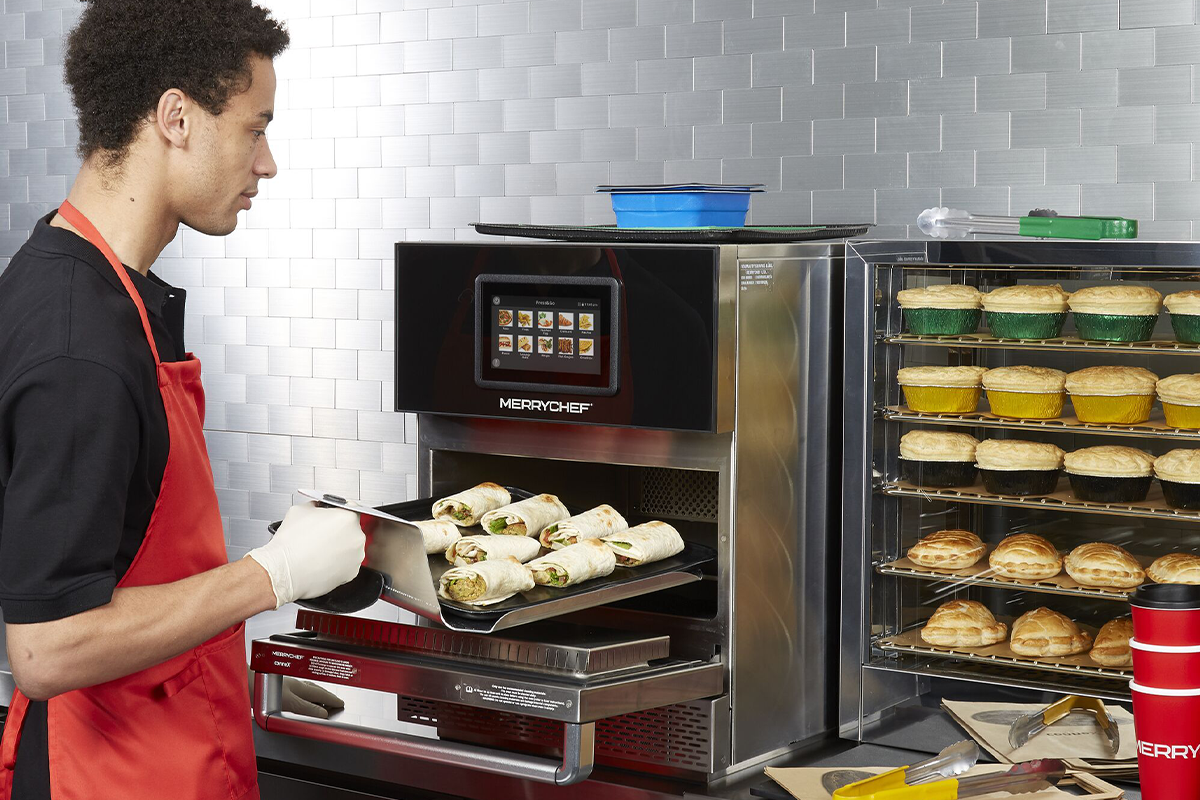
One of the biggest shifts will be robotics. Small-format, task-specific automation has huge potential to help retailers do better things, faster and more consistently. This is something I’m personally investing in and excited to bring to market in 2026.
Forecasting is another area where AI is already delivering real returns. Tools that predict sales and production requirements are now incredibly accurate and genuinely profitable. Importantly, low-cost versions exist, making this accessible beyond the big players. Platforms like Cybake and Martee AI are well-respected in this space.
We’re also seeing major improvements in apps and customer interfaces, as well as marketing tools that use geolocation and behavioural data to tailor messaging in real time. Businesses like Axon Vibe are leading here.
Add to that improved insight into customer flow, traffic patterns and catchment behaviour through systems such as Nimbus Maps, and operators suddenly have access to a level of intelligence that was unimaginable even a few years ago.
Let’s talk about FTG Navigator. How does it work and what gap does it fill?
It’s really two things. The first is the AI app, which is designed to give retailers a genuinely affordable tool that drives sales, or their money back. Using machine-learning visual analysis, it identifies missed opportunities in FTG displays and feeds back practical actions in seconds. It’s about speed, clarity and impact.
The enterprise version takes this further for larger, multi-site businesses. It brings insight together across estates, tracks progress over time and creates a measurable loop of improvement rather than one-off audits.
The second side of FTG Navigator is what someone recently described to me as a ‘global boutique consultancy’, which I secretly love. In reality, we’re a small team of four: deep sector experience combined with new energy, young researchers and project leads. Together, it’s a powerful mix.
We exist to help people make more money from FTG. We specialise in supermarkets, convenience and forecourts, right at the cutting edge, where small changes make big differences.
The gap we fill is simplification. There’s a huge amount of data and technology available but it’s overwhelming. We help turn that into clear decisions and fast action.
Can you expand on business partnerships and future ambitions?
I’m incredibly proud of our global connections, supporting retailers and suppliers across Ireland, Australia, South Africa and NZ.
Some of the work we’ve done over the long term means a huge amount to me. Park Garage Group is a great example. They took the decision to close 12 Greggs franchises to build their own destiny. Over the past 12 months, we’ve helped create Bakery 79, supporting range, commercial structure, supply chain and operations.
But crucially, we also embedded technology: Cybake to manage production, sales and waste, and FoodDocs to manage food safety while providing central visibility of quality and standards. Seeing Bakery 79 win ‘FTG Store of the Year’ at the Forecourt Trader Awards is one of my proudest moments.
Keells in Sri Lanka has been another incredible journey. Over 18 months, we added over 60% revenue in the first year, overhauled the food proposition, introduced modular concepts, led pizza innovation, built a fried chicken offer and launched a sweet treats and dessert bar. More than the numbers, it’s been about working shoulder-to-shoulder with amazing people and seeing teams grow.
Beyond that, we support forecourt operators rethinking local food models, café chains rebuilding profitability, pizza brands aligning franchising standards, and start-ups scaling exciting ideas across the UK.
One relationship I’m particularly proud of is with Win Win Water. A fully compostable, bio-based water bottle with zero plastic. I’ve never charged them for my work – my daughter told me I had to help, whatever it took. Becoming a shareholder in 2025, then seeing them launch in GAIL’s recently was genuinely emotional.
I’ve also realised that I need to put my money where my mouth is, so I co-own a number of convenience stores. There’s no better way of becoming a better consultant/advisor than actually getting involved.
Looking ahead, I want to work with those genuinely committed to change. It’s not about brand size; it’s about potential and people. The best work happens when belief and effort are real.
How can independent operators with smaller budgets take advantage of AI?
Honestly, start simple. Lean into tools like ChatGPT, even the free versions. Teach it your business and your competitors. Ask it questions. The results can be astonishing.
Read, learn and experiment. Attend events. Watch TED talks. Rekindle the curiosity that got you into retail in the first place and view it through an AI lens. Language models can help analyse data, problem-solve, review layouts and even scan visuals. The more you ask, the better it gets.
Most importantly, this is currently high-ROI, low-cost investment. That window won’t stay open forever. Early adopters will win.
This sector is full of opportunity but it’s not easy. Government policy, labour costs, energy and supply chain pressures are real. The temptation is to scale back: less fresh food, more packaged product, fewer people, longer shelf life.
But that’s a vicious cycle. It might relieve short-term pressure, especially when supported by tempting listing fees from big-brand suppliers, but it risks eroding the very reason customers come to you.
The future isn’t about doing less – it’s about doing things differently. Adapting the model, not abandoning it. Leaning into AI, automation and sometimes external support to help see the next phase of the game.